
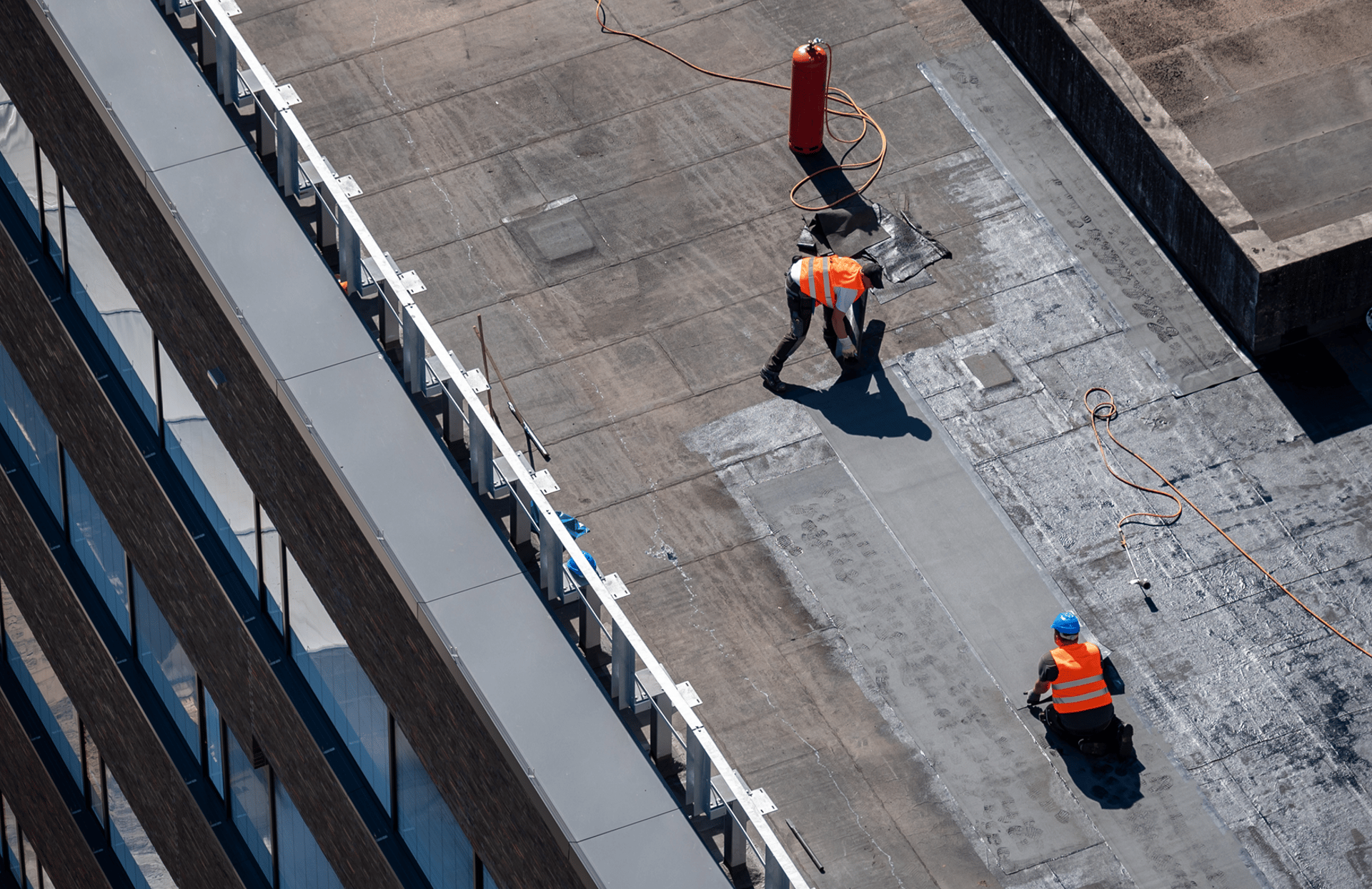
Rooftop Waterproofing
Why is rooftop waterproofing necessary in Singapore?
Rooftop waterproofing is especially necessary in Singapore because of these key reasons below.
High Humidity
Constant humidity (70–90%) keeps surfaces moist.
Moisture can seep through cracks if roofs aren't properly sealed, leading to mold, mildew, and structural weakening.
Extreme Heat and UV Exposure
Singapore gets strong sunlight year-round.
Thermal expansion and contraction from heating during the day and cooling at night cause materials to crack over time — waterproofing helps absorb movement and prevent cracks from becoming leak points.


Heavy and Frequent Rainfall
Singapore has a tropical rainforest climate with high annual rainfall (over 2,000 mm per year!).
Without good waterproofing, rooftops easily leak and cause water damage inside the building.
Urban Density
Many buildings in Singapore are high-rise or have flat roofs (which are more vulnerable to water ponding).
A damaged rooftop can quickly affect multiple units, especially in condominiums or HDB blocks.
Regulatory and Building Standards
Building codes in Singapore often require proper waterproofing for new and renovated buildings to meet safety and quality standards


Protects Investment and Reduces Repair Costs
Early waterproofing prevents costly repairs later — fixing internal leaks, replacing damaged ceilings, repainting, etc., is much more expensive than good initial waterproofing.
Essential for Rooftop Gardens and Solar Installations
Green roofs and solar panels are getting more popular in Singapore's eco-friendly movement.
These setups need even stronger waterproofing to handle extra weight and moisture.
Type of Properties
Internal Wet Areas: Commonly used in bathrooms, kitchens, and basements to prevent water seepage.
Water Storage Structures: Ideal for waterproofing water tanks and reservoirs.
Concrete Surfaces: Protects foundations, walls, and roofs from water damage.
Benefits of
rooftop waterproofing
Cost-Effective
Cementitious waterproofing are relatively inexpensive compared to other waterproofing methods and are ideal for large surface areas, such as basements.Resistant to Positive and Negative Water Pressure Cementitious waterproofing are high resistant to water coming from both sides and especially important for underground structures.
Low Maintenance
Once applied, cementitious waterproofing requires very little upkeep or monitoring over years.Customizable
Cementitious waterproofing can be modified with polymers or acrylic additives, allowing this method to be more flexible and crack-resistant.
RER Builders & Services Pte Ltd
Effective waterproofing system for your properties.
Contact
Email : sales@rerbuilders.sg
Mobile : +65 8621 5576
© 2025. All rights reserved. RER Builders & Services Pte Ltd